NYSC Zonal Inspection Team Commends Dinat Academy’s Institutional Model for Youth Empowerment As Founder, Prince Femi Fadina, Reaffirms Vision for Cultural Entrepreneurship
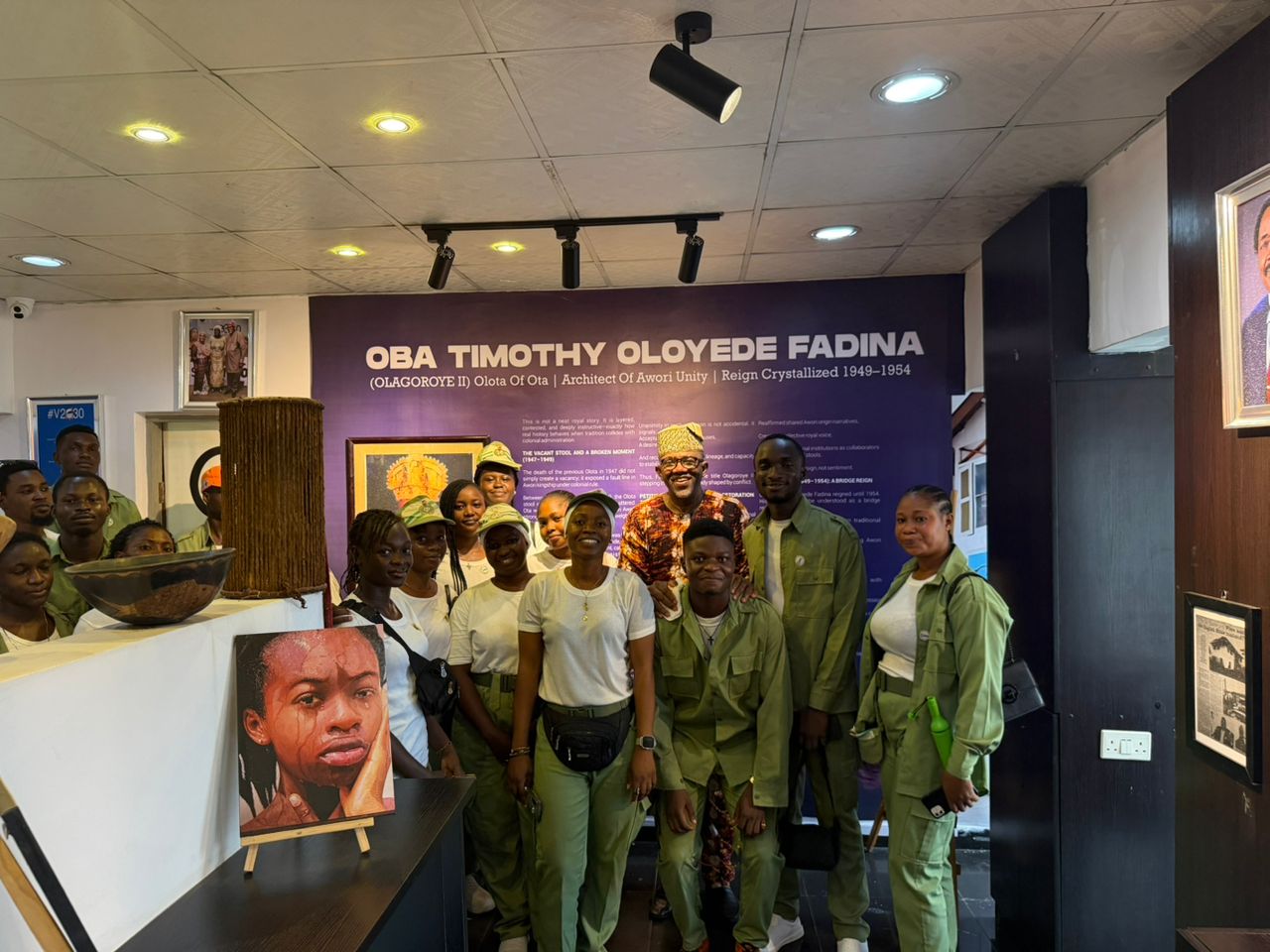
In a significant endorsement of innovation in youth development, the National Youth Service Corps (NYSC) Zonal Inspection Team paid an official visit to Dinat Academy, where they were received by the Founder, Prince Femi Fadina, in what observers described as a “forward-looking convergence of policy and purpose.”
As a seasoned observer of Nigeria’s evolving tourism and creative economy landscape, VOA News report that Dinat Academy is not positioning itself as another training centre — but as an institutional platform designed to convert cultural heritage into structured economic opportunity.

The visit formed part of the NYSC’s routine inspection and engagement with accredited organisations hosting corps members.
However, what unfolded went beyond compliance checks. It became a strategic dialogue on the future of cultural entrepreneurship as a viable pathway for youth economic empowerment.
Prince Femi Fadina, addressing the inspection team, articulated the Academy’s foundational philosophy with clarity:
“Our vision is clear: To institutionalise cultural entrepreneurship as a structured pathway for youth economic empowerment and generational wealth creation.”
That clarity appears to be the Academy’s defining strength.
Culture as Structured Capital
Dinat Academy operates on a distinctive premise: that culture must move from informal expression to formal enterprise. In a country rich with festivals, crafts, indigenous knowledge systems, and heritage assets, the Academy seeks to address what many development analysts describe as “value leakage” — the persistent underpricing and under-structuring of cultural capital.
Rather than treating culture as seasonal celebration, Dinat Academy frames it as vocational infrastructure.
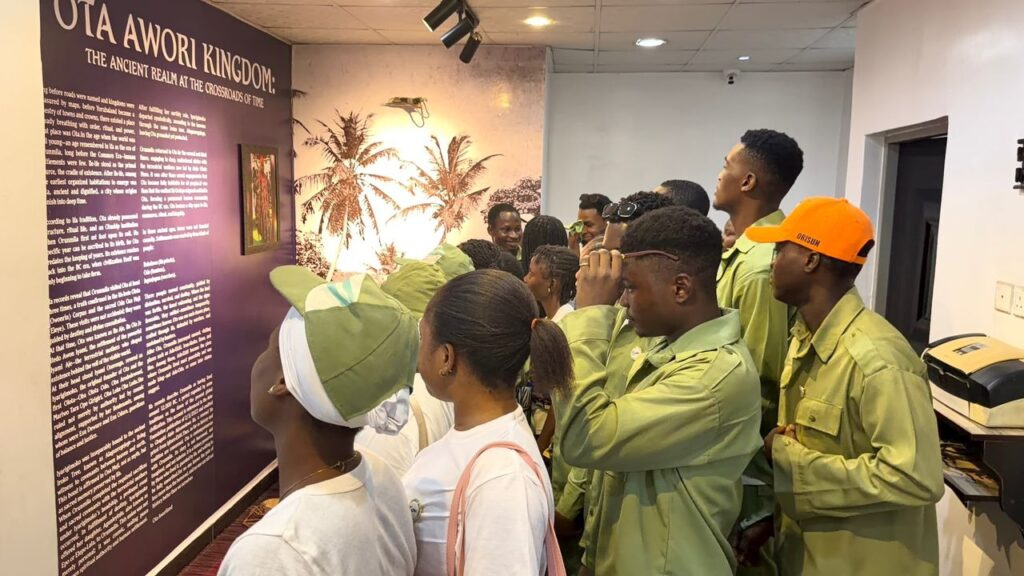
The NYSC Zonal Inspection Team commended the Academy’s alignment with national objectives on youth empowerment, skills acquisition, and entrepreneurship development. Particular attention was drawn to its structured modules in cultural tourism development, identity product creation, documentation systems, and enterprise governance.
Above the Curve, Not Below Waste
At the heart of the Academy’s operational philosophy is what it calls the “Above the Curve” model — a framework that challenges youth to move beyond informal hustle toward measurable growth and profitability.
Drawing inspiration from global enterprise performance metrics such as the Rule of 40 — which balances growth and profitability — the Academy adapts this principle for cultural entrepreneurship. Participants are trained to progress from survival-level enterprise (40%) to structured viability (60%), and ultimately to institutional scale (80%).
In practical terms, this means:
Registered businesses, not casual ventures
Revenue models, not random earnings
Governance systems, not personality-driven projects
Reinvestment strategies, not one-off events
The inspection team observed documentation processes, vocational training sessions, and enterprise blueprints developed by corps members currently serving within the Academy.
A Platform for Generational Wealth Creation
Prince Femi Fadina emphasized that Dinat Academy’s long-term ambition extends beyond short-term empowerment.

“We are building systems,” he stated. “If culture is properly structured, it becomes generational wealth. If it is not, it becomes waste.”
The Academy’s model integrates tourism development, creative enterprise incubation, and vocational skill certification — positioning young Nigerians not merely as job seekers, but as cultural enterprise architects.
From curated heritage experiences to identity-based merchandise development, the Academy’s framework seeks to translate local narratives into premium economic value.
National Alignment and Strategic Relevance
The NYSC Zonal Inspection Team acknowledged the Academy’s contribution to national development priorities, particularly in:
Youth employability
Entrepreneurship incubation
Creative economy growth
Community-based tourism development
In an era where Nigeria’s demographic profile presents both opportunity and urgency, institutions like Dinat Academy are redefining how youth engagement can intersect with economic transformation.
Looking Ahead
The visit concluded with a renewed commitment to collaboration, mentorship, and institutional strengthening. For Dinat Academy, the engagement represents not just validation — but momentum.
As Nigeria continues to explore pathways beyond extractive economies, cultural entrepreneurship may well emerge as a critical frontier. And if the Academy’s vision holds steady, it could serve as a replicable model for structured, scalable, youth-driven enterprise rooted in identity and heritage.
In the words of its Founder:
“Culture must not remain ceremonial. It must become structural.”













Post Comment