Early Political Campaigns Threaten Democracy — INEC Chairman

The Chairman of the Independent National Electoral Commission (INEC), Prof. Mahmood Yakubu, has raised concern over the growing trend of premature political campaigns in Nigeria, warning that the practice undermines governance and erodes the integrity of the electoral process.
Speaking at a stakeholders’ roundtable discussion on Wednesday, Yakubu said political parties, aspirants and their supporters have consistently flouted the law by openly campaigning long before the official timetable is issued by the Commission.
“Section 94(1) of the Electoral Act 2022 prohibits the commencement of campaign earlier than 150 days (five months) before polling day and must end 24 hours prior to that day. The idea is to prioritise governance over electioneering from one electoral cycle to another,” he explained.
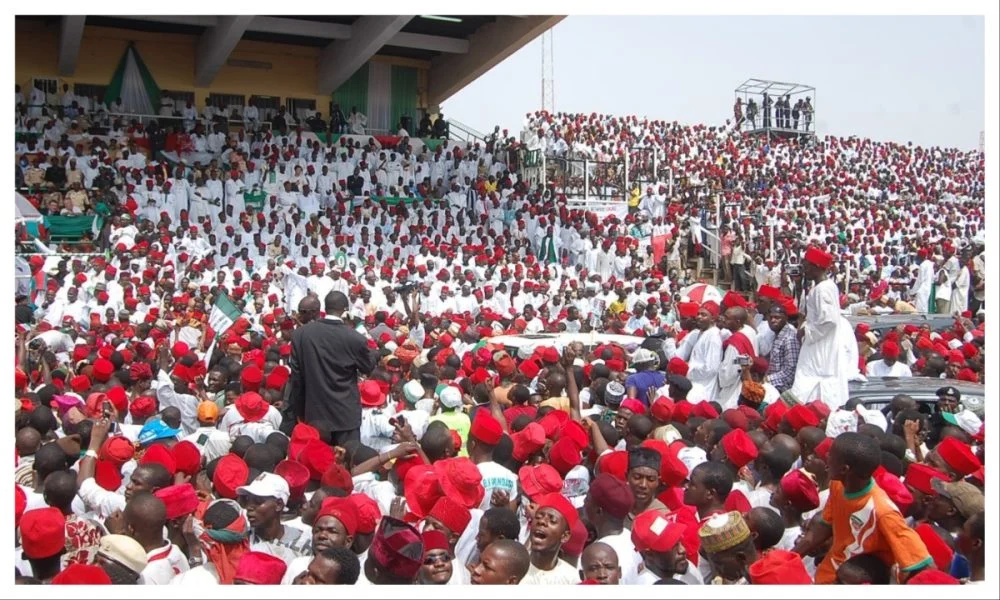
He lamented that despite clear provisions in the law, “political parties, candidates and their supporters seem to be perpetually in election mode even when the Commission is yet to release the Timetable and Schedule of Activities for elections or ahead of the timeframe provided by law. Across the country, we have seen outdoor advertising, media campaigns and rallies promoting various political parties and candidates.”
Yakubu warned that such actions not only breach the law but also make it difficult for INEC to effectively monitor campaign financing.
“These activities undermine the Commission’s ability to track campaign finance limits as politicians, prospective candidates and third-party agents expend large sums that cannot be effectively monitored before the official commencement of campaigns,” he said.
The INEC chairman, however, admitted that the commission is constrained by the legal framework in addressing such violations.
“Quite correctly, Nigerians expect INEC, as registrar and regulator of political parties, to act in the face of the brazen breach of the law on early campaigns. However, the major challenge for the Commission is the law itself,” he said.
According to him, Section 94(2) of the Electoral Act only prescribes a “mild sanction” of N500,000 on conviction for campaigns conducted within 24 hours to polling day, but contains no provision for punishment for campaigns launched earlier than 150 days before the election.
“Here lies the challenge for the Commission in dealing with early campaigns by political parties, prospective candidates and their supporters,” Yakubu stressed.
He acknowledged that the problem was not new, adding that the inability of INEC and other regulatory agencies to address it within the existing legal framework called for “deep reflection”.
“I am glad that the immediate past chairman of INEC, Professor Attahiru Jega, is here to share his experience on the matter in a keynote address,” Yakubu said, noting that “as the National Assembly is currently reviewing our electoral laws, the Commission has also invited the leadership of both the Senate and House of Representatives Committees on Electoral Matters. I am confident that they will give due consideration to actionable recommendations by experts, leaders of political parties, the President of the Nigerian Bar Association (NBA), the Broadcasting Organisation of Nigeria (BON), the National Broadcasting Commission (NBC), which regulates the broadcast media, and the Advertising Regulatory Council of Nigeria (ARCON), which regulates advertisement, including outdoor advertising.”
Reiterating INEC’s position, Yakubu stressed that “protecting our electoral process and consolidating our democracy is a multi-stakeholder task.”
President Bola Ahmed Tinubu had earlier weighed in on the issue of premature campaigns. Meeting with North East governors at the Presidential Villa last week, Tinubu acknowledged the political pressure from rivals but insisted he remained focused on governance.
“In the political environment, we are being drawn into early political activities from our rival political parties, but whichever way it is, I am not distracted. I am solidly focused, focused on what is ahead. Politics will happen at a given time,” he said.
The president emphasised unity of purpose with governors, noting, “Working together the way we have been is the way to go to build the Nigeria of our dreams. There’s no way politics will not interfere once in a while. It is for us to embrace the heart of winning, and from that heart we know the superior thinkers and doers. Our political party will prove itself eventually.”
Earlier, the presidency had claimed that the opposition’s early campaign activities aimed at unseating the government in 2027 forced the ruling party to publicly endorse Tinubu for a second term.
The debate was fuelled by campaign posters of the president that flooded major streets in Abuja months ago, even before the endorsements, drawing condemnation from opposition parties and civil society groups. At the time, the presidency distanced itself from the posters and warned promoters to desist. But with the materials still on display and no action taken against those behind them, many now believe the promoters enjoy the tacit backing of either the presidency or the ruling All Progressives Congress (APC).
Jega wants parties, candidates held accountable for third-party activities
Delivering a keynote address at Wednesday’s stakeholders’ meeting, former INEC chairman Prof. Attahiru Jega called for strict sanctions and stronger alliances among stakeholders to curb the rise of premature campaigns in Nigeria, warning that the practice could undermine the credibility of the 2027 elections.
Jega said the solution lies in clearly defining campaign offences, prescribing tougher penalties and ensuring enforcement.
“All election campaign offences, and especially premature ones, should be carefully defined with strict penalties specified and strict enforcement where applicable,” he said.
He also urged that parties and candidates be held responsible for activities carried out by third-party campaign groups.
“It is very important because it is the easiest excuse for politicians to say campaigns are done by others, whom they have no control over. Once you can say parties and candidates are vicariously responsible for third-party campaigns, they will have to take measures to ensure that they do not violate the law,” he added.
According to him, the Economic and Financial Crimes Commission (EFCC) and the Independent Corrupt Practices and Other Related Offences Commission (ICPC) must probe the funding sources of third-party campaigners. He said such spending should also be factored into the official campaign finance limits.
The former INEC chairman, who led the commission between 2010 and 2015, said Nigeria could learn from other democracies such as Australia, Mexico, the Philippines and India, where premature campaigns are explicitly prohibited and violations attract penalties ranging from fines to imprisonment.
He described premature campaigns as “undesirable aberrations” that distort the playing field, undermine the law, entrench impunity and distract incumbents from governance.
“Premature election campaigns are basically campaigns done outside the legally defined period. They confer unfair advantages, entrench the culture of lawlessness and create political tensions that may result in conflicts and undermine law and order,” he said.
Jega also criticised Nigerian politicians, especially incumbents, for exploiting loopholes in the law to mount billboards, sponsor adverts and commission projects years before elections.
“When incumbents do this and get away with it, or third parties do it on their behalf, obviously a spiral of illegalities and lawlessness is unfolding, undermining the rule-based system and the integrity of the electoral process,” he warned.
He argued that weak provisions in the Electoral Act and the reluctance of lawmakers, many of whom he said were beneficiaries of early campaigns, to strengthen the law were at the heart of the problem.
“Many members of the National Assembly are unlikely on their own to pass laws that restrain them. So, a strong, close-knit, focused group of stakeholders such as civil society, election managers, security agencies and the media is highly necessary to drive these reforms,” he said.
“Anybody who understands what democracy should mean to the voters and why it is important to do elections on a level playing field would not recklessly undermine clear legal conditions and conduct these premature campaigns,” he added.
Elected officials responsible for promotional campaigns – IPAC
The Inter-Party Advisory Council (IPAC) has also condemned the surge of premature campaigns across Nigeria, warning that the practice is illegal, unconstitutional and capable of derailing democratic development.
IPAC chairman, Yusuf Dantalle, said the electoral process must be protected through strict compliance with the laws, rules and regulations governing campaigns.
“It is inappropriate, unfair, unjust, illegal, unconstitutional and undemocratic for any political party, aspirant or supporter to contravene the law to advance their political ambitions against others,” he said.
He lamented that while some politicians adopt subtle forms of early campaigning, others “throw caution to the wind and campaign publicly as if there are no laws or guidelines for political activities, thus overheating the polity and distracting elected officers from their responsibilities.”
“Ironically, some of these elected and appointed public officers are responsible for promotional campaigns, taking advantage of the paraphernalia of their offices. This undemocratic practice must stop,” he said.
“After 26 years of unbroken democracy, it’s time to build a strong, equitable and inclusive society. Politicians cannot continue to undermine the electoral process and expect free, fair elections. We must rebuild trust and foster integrity and sustainability,” he added.
While acknowledging the judiciary’s role in electoral justice, Dantalle warned against compromise, alleging that corruption in electoral litigation had eroded public trust.
“Sadly, the judiciary that is supposed to be the temple of justice is sought for sale to the highest bidder, as witnessed in past electoral cases,” he said.
“The Council will stand by INEC and other democratic stakeholders to ensure that political parties and their supporters comply with electoral rules. IPAC will not sit back and allow anti-democratic forces to subvert the process with impunity,” he said.
He added that the Council would intensify voter education, especially on premature campaigns and voter registration.
Police vow to enforce electoral laws
Meanwhile, the Nigeria Police Force has assured that it will continue to enforce electoral laws and provide adequate security to guarantee peaceful campaigns and elections nationwide.
Speaking on behalf of the Inspector-General of Police, Commissioner of Police Abayomi Shogunle said the Force remains committed to bridging the gap between leaders, communities and citizens, stressing that the relevance of electoral laws to security and development must not be overlooked.
“Every law that is made, we in law enforcement have a duty to enforce. But we must also reflect on the relevance of these laws to issues of security and development. That is a question we must look deep into,” he said.
Shogunle emphasised that the police will not shy away from their constitutional duty of ensuring peaceful political activities across the federation.
“The Nigerian Police Force will continue to enforce every law passed by the National Assembly. We will also do everything necessary to ensure campaigns go on peacefully, at any time and in any location,” he said.
He further assured that security agencies are prepared to provide adequate protection during campaigns and on election days, irrespective of the location or political affiliations of candidates.
Lawyers weigh in
Commenting, a senior lawyer, Salam Jawondo (SAN), echoed the concerns raised by the INEC chairman, saying the commission is handicapped as it cannot punish violators without clear legal provisions.
He said the way forward is for the National Assembly to amend the law, since the matter cannot be fully addressed under existing provisions. “INEC has now thrown the challenge to both the National Assembly and the Presidency,” he added.
Jawondo lamented that Nigeria’s major problem is the absence of a clear space for governance. “Once a politician or party wins an election, the process of the next one begins almost immediately. By February next year, INEC will issue a notice of election, followed by the timetable for 2027. As reasonable people, even if there is no specific law on this, we should allow ruling parties to focus on governance. Unfortunately, that is not the case here.
“The opposition should constructively assess and criticise the ruling party while the ruling party focuses on delivering its promises. But in most cases, it is the opposition that starts the issues, either by condemning the election or laying claims to victory. Politics in Nigeria is like being in the marketplace; you cannot allow your opponent to out-market you. That is the nature of our politics,” he said.
He noted that in advanced democracies such as the United States, elections end once results are declared, and governance takes centre stage. “This is why we don’t make much progress in economic activities; there is too much concentration on politics. At the end of the day, it boils down to our attitude. Not everything is about the law. Do we have laws guiding how we run our families before we know what to do?” he asked.
However, Barrister Josiah Adebayo, Head of Chambers at Akin Akintoye (SAN) Chambers, faulted the alarm raised by the INEC chairman.
“As far as I am concerned, it is a question of the capacity of the person manning INEC. There are provisions either in the guidelines of the Electoral Act or in our criminal and penal codes that sanction many of the acts that undermine our system.
“If persons or parties are found culpable, INEC should take the bull by the horn and prosecute them. Lamentation will not solve the problem. We need people with the capacity and genuine interest of the people at heart to do the right thing,” he said.
He added that the Electoral Act empowers INEC to make guidelines, and when such guidelines are flouted, they carry the force of law as subsidiary legislation.
Adebayo stressed that many political actors behave irresponsibly because authorities often fail to enforce existing laws. “The Electoral Act may not cover everything, since legislators are not God. But if the INEC chairman has identified gaps, the next step is to gather his commissioners and brainstorm on temporary solutions pending constitutional amendments.
“The essence of the guidelines and the law is to ensure a level playing field. If a wealthy candidate begins campaigning three years before an election while another candidate only gets resources a week before the election, where is the fairness? That is why the Electoral Act must remain in place,” he said.
INEC’s position belated– Analysts
Political analyst Saidu Ahmad Dukawa faulted the timing of INEC’s warning against early campaigns, saying the statement should have been made much earlier.
“One wonders why he made the statement so late. After all, campaigns have been on for quite some time. Even before the regime reached two years in power, they started campaigns for the next election,” he said.
Dukawa, however, acknowledged the validity of the warning, insisting it was long overdue. “So we can say he is right to say that, you know? Yes, he is right. He is right. Why he kept mute until now is what is surprising,” he added.
Another analyst, Dr Kabiru Sufi, also warned that early campaigns could distract officeholders from fulfilling their constitutional duties.
Sufi suggested that a clear timeline should be set for political activities.
“I think maybe months before – like six or eight months. This should be discussed at a high level, and INEC should be mandated to provide a timetable that must be strictly adhered to. For now, many people are not very clear about what early campaigns mean,” he said.
He noted that alliances and constant political rhetoric often create the impression of campaigns long before official timelines.
Sufi therefore called on INEC to initiate discussions with stakeholders to define clear boundaries.
“INEC can start a discussion so that a timetable is agreed with all parties – maybe a year before swearing-in or a year before the election, depending on what is agreed. Then INEC can draw the timetable and ensure it is strictly followed,” he said.






Post Comment